Hosting Go Aarhus at Lunar
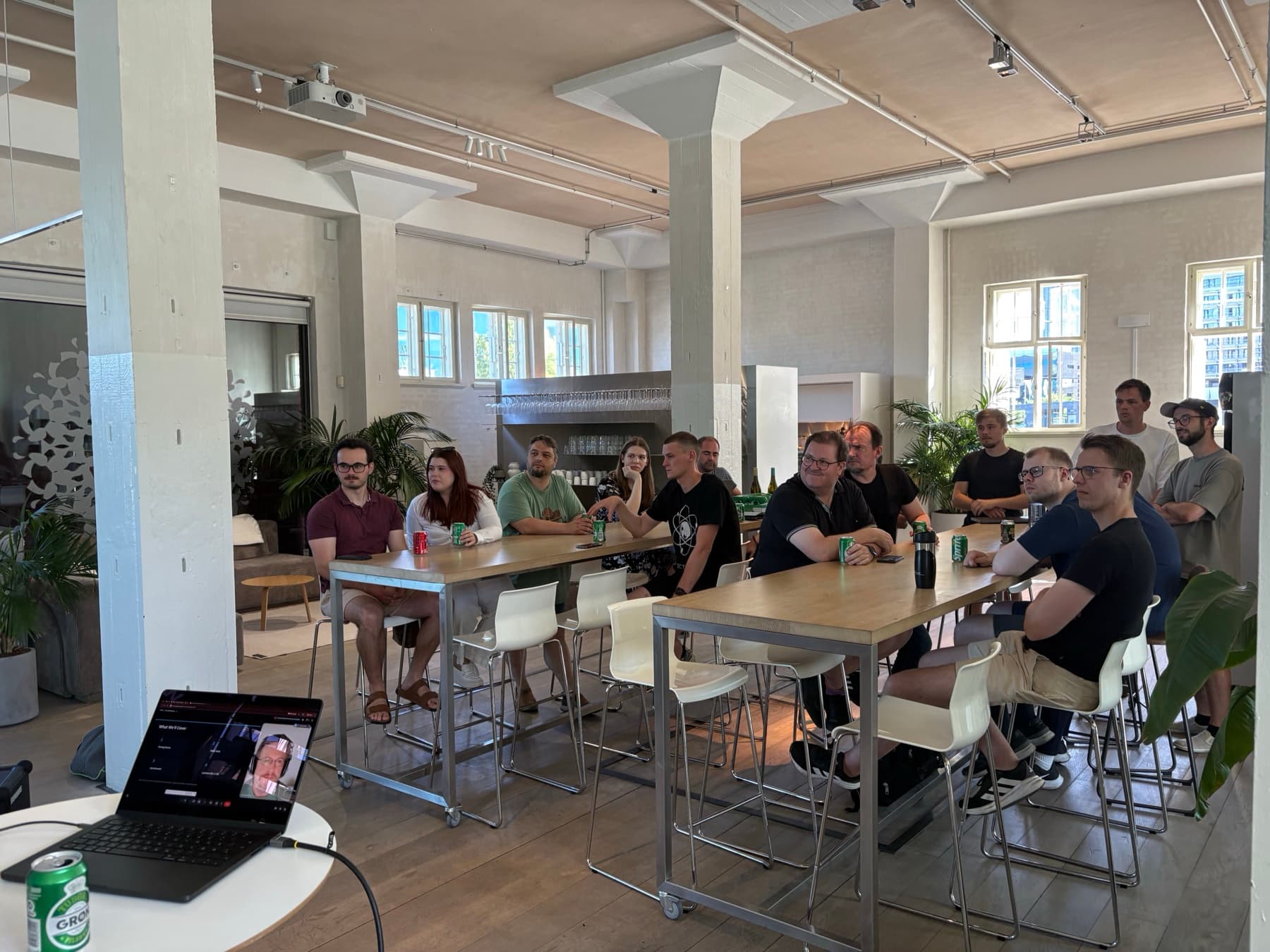
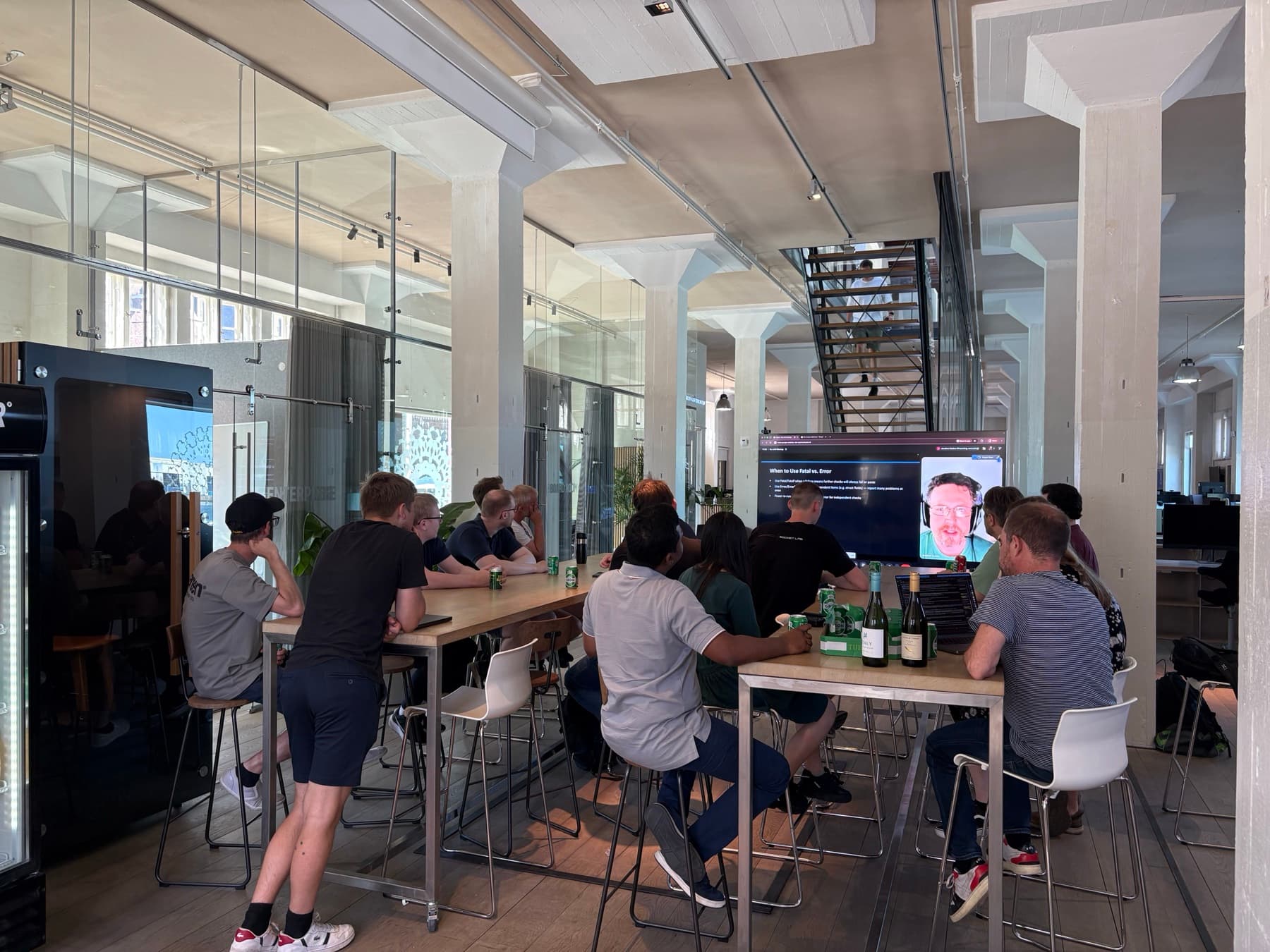
On 25 June, Go Aarhus rose again at Lunar. We hosted an evening about Go, testing, production rollouts, and the kind of local engineering conversations that are hard to recreate in a Slack thread.
At Lunar, Go is part of our day-to-day backend work. We use it in services where explicit error handling and straightforward concurrency make our lives easier. But this meetup was not only about how we use Go at Lunar. It was about helping the wider Go community in Aarhus meet, compare notes, and learn from people who have been close to the language and its production edge cases.
The credit for bringing Go Aarhus back goes to the organizers: Asger Noer, David Zachariae, Benjamin Nørgaard, and Jonas Tranberg. We were glad to provide the room, food, and drinks.
Why we hosted
We are a Nordic bank, which means our engineering work comes with real constraints: correctness matters, deployments have to be boring in the best possible way, and small technical choices can end up affecting customers directly. That is one reason Go has stayed interesting to us. The language does not remove complexity, but it often makes the shape of that complexity visible.
Hosting a meetup is a small way of giving back to the community around that work. We get a lot from open source, from conference talks, from books, and from the people who write down what they learned after a long debugging session. Opening the office for an evening of Go was one way to keep that loop going locally.
It also comes with a trade-off. A good community event should not feel like a company event with a different logo. We provided the room, drinks, and pizza, but the point was the community: the speakers, the questions, and the conversations after the talks.
Testing from the standard library outward
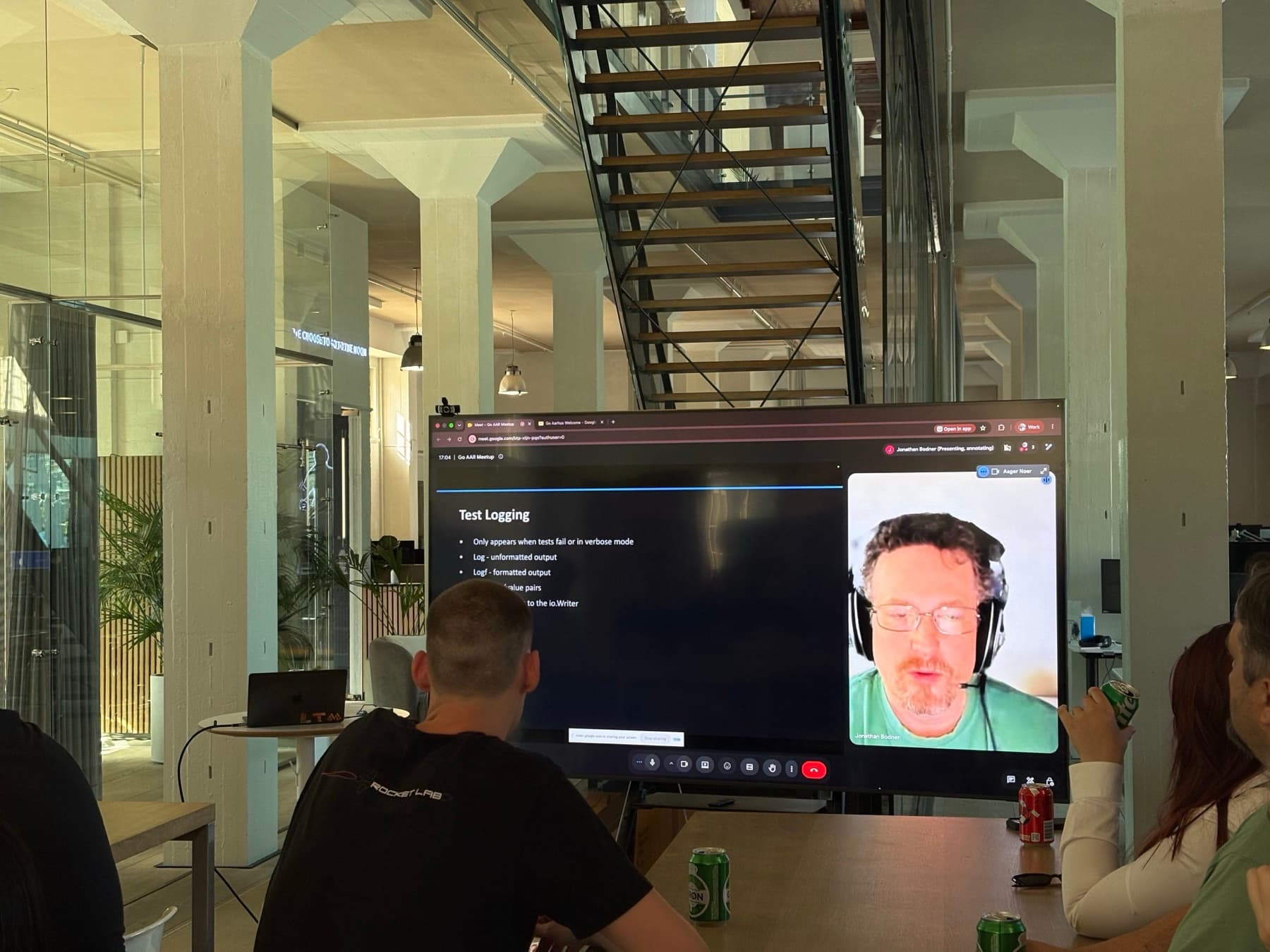
The first talk was Testing in Go: Basics to Advanced by Jon Bodner.
One of the better decisions in Go's design was including testing support in the standard library. It means every Go developer starts with a shared baseline, instead of needing to choose a framework before writing the first useful test.
Jon covered the testing packages from the basics through more advanced use, including the new synctest package in Go 1.26. That made the talk useful across experience levels: if you are new to Go, the standard library gives you a practical starting point; if you have written Go for years, the newer tools are a reminder that the testing story is still moving.
Jon is the author of Learning Go: An Idiomatic Approach to Real-World Go Programming. If you have learned Go recently, or helped someone level up in it, there is a good chance that book has been part of the conversation. He mentioned that the 3rd edition of the book is getting released in 2027, with new topics such as how to profile Go code correctly.
When robust rollout processes still are not enough
The second talk was Uncovering a bug in Go by deploying to our critical infrastructure by Johan Abildskov.
Johan shared a story from Uber, where large-scale Go rollouts, robust deployment processes, and critical infrastructure still were not enough to avoid a bug. The talk covered the setup, the bug, the problem, and the path from incident to Go contributor, even though the contribution was small.
That is the kind of talk that tends to stay with engineers. Not a polished "everything worked" story, but a concrete production problem where the useful part is in the details: what failed, how he reasoned about it, and what changed afterwards.
It also maps well to how we think about engineering at Lunar. In a regulated environment, process matters. Automation matters. Rollout discipline matters. But none of those remove the need for engineers who can stay curious when the system behaves in a way the process did not predict.
What we learned
The takeaway is simple: communities stay alive when people make time for them. For us, hosting Go Aarhus was a good reminder that some of the best engineering conversations still happen when people step away from their usual teams for an evening and compare notes in person.